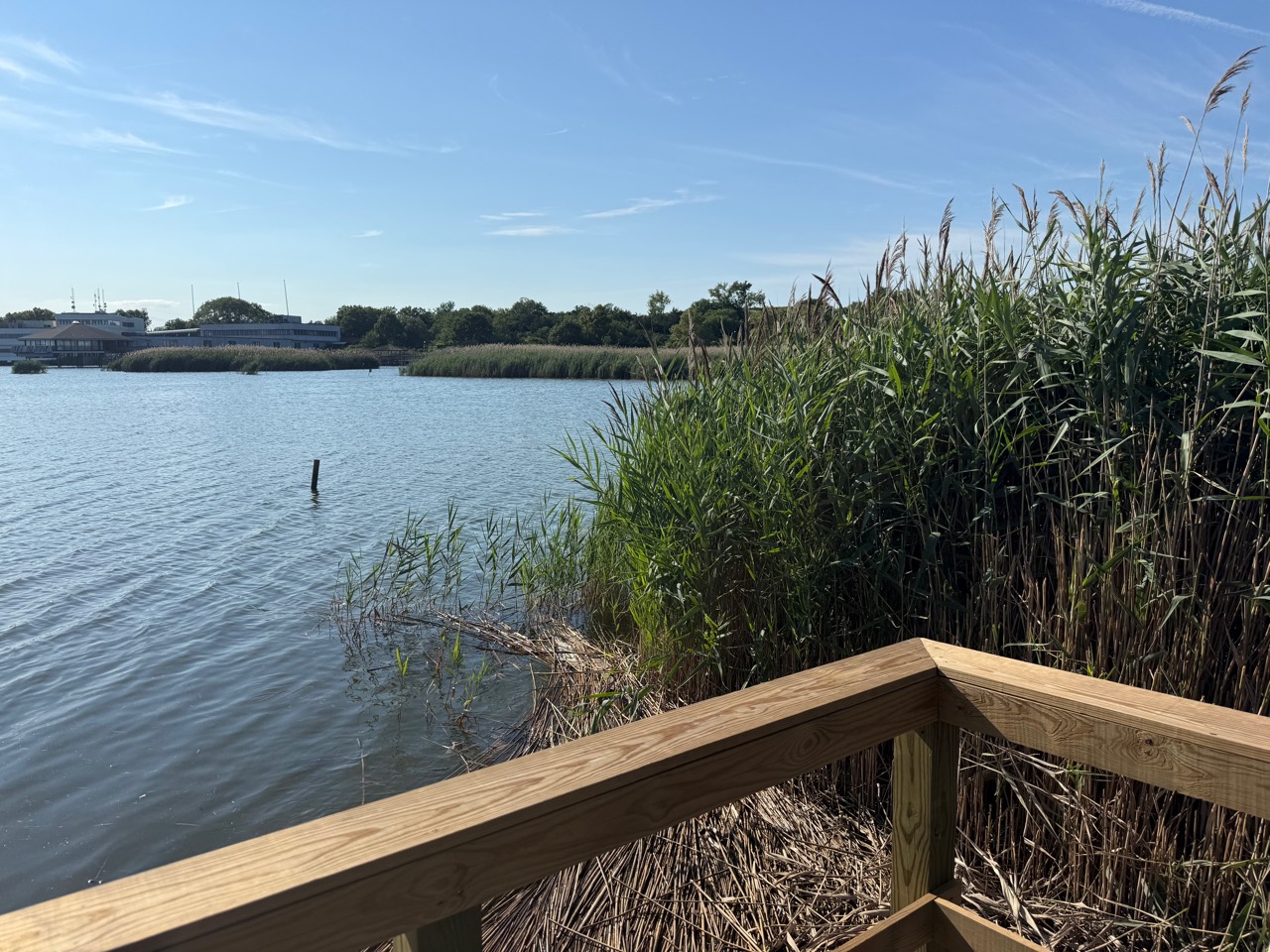
Meadowlands Field Office
Some days, this is where you can find me—working from one of two bird blinds at DeKorte Park in the New Jersey Meadowlands.
Last week I carried my work past the Meadowlands Environment Center, past the William D. McDowell Observatory, and out onto the Marsh Discovery Trail. I went back for several days, moving between two bird blinds, trying to learn which one let me work.
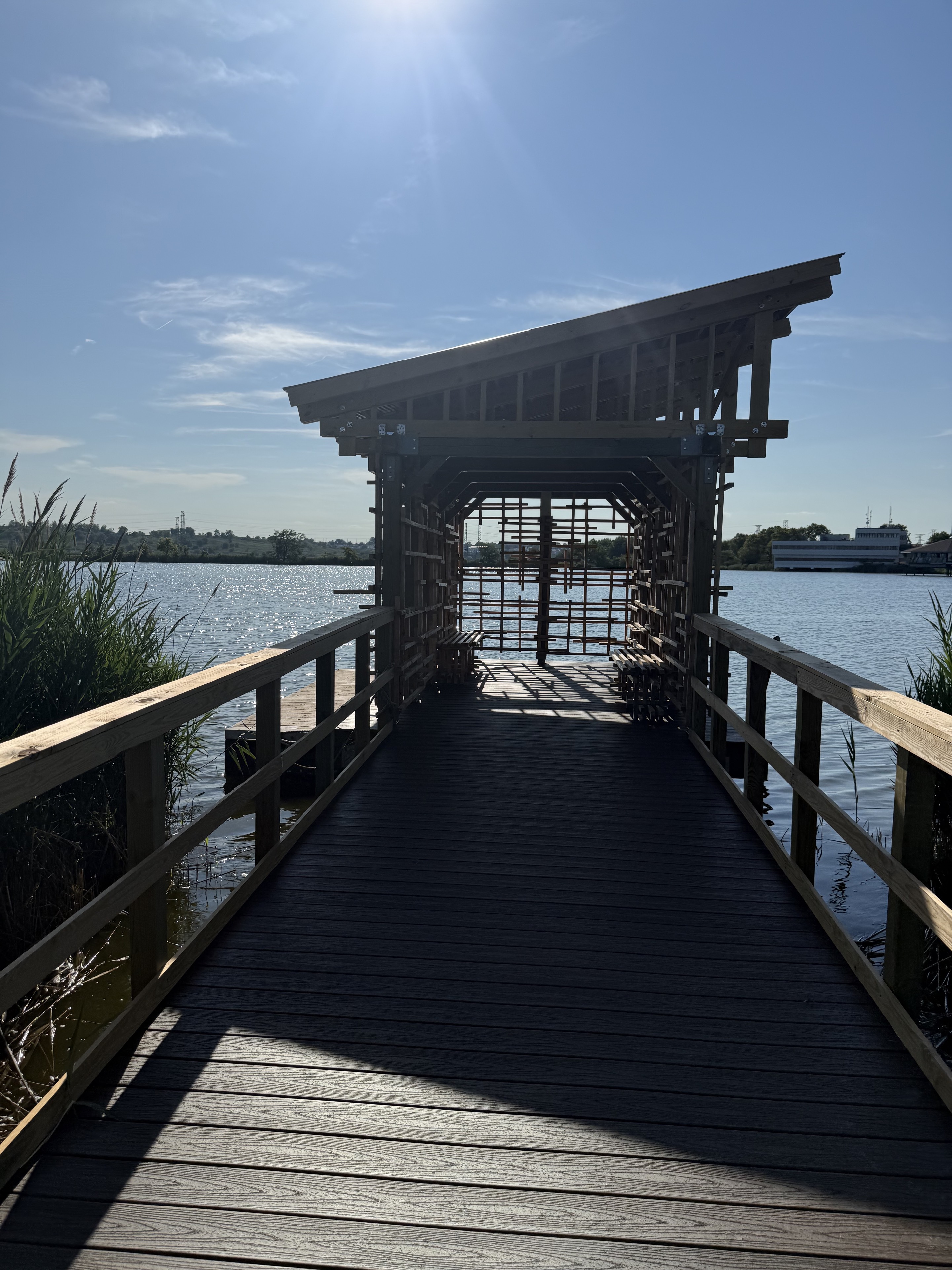
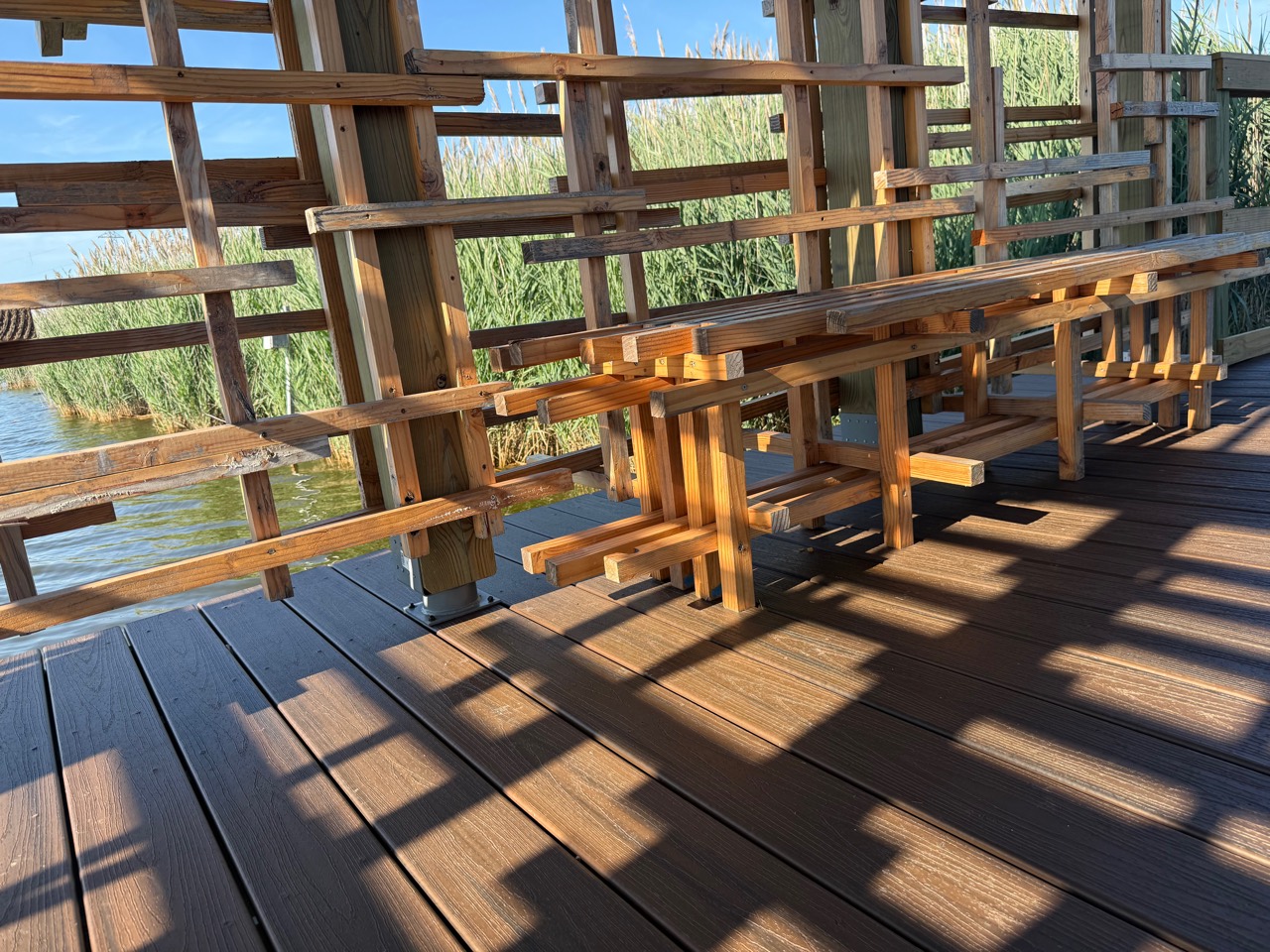
One was all timber lattice, roof, bench, wind. The screen broke the marsh into fragments and threw a shifting drawing of itself across the floor. Water flashed through the gaps. Reeds moved. Footsteps came down the boardwalk and disappeared.
The other blind was a dark box in the reeds: two openings, one narrow shelf, the whole wetland reduced to a frame.
Birds, voices, light, shadow—interruptions, yes, but not notifications. They arrived, crossed my attention, and passed.
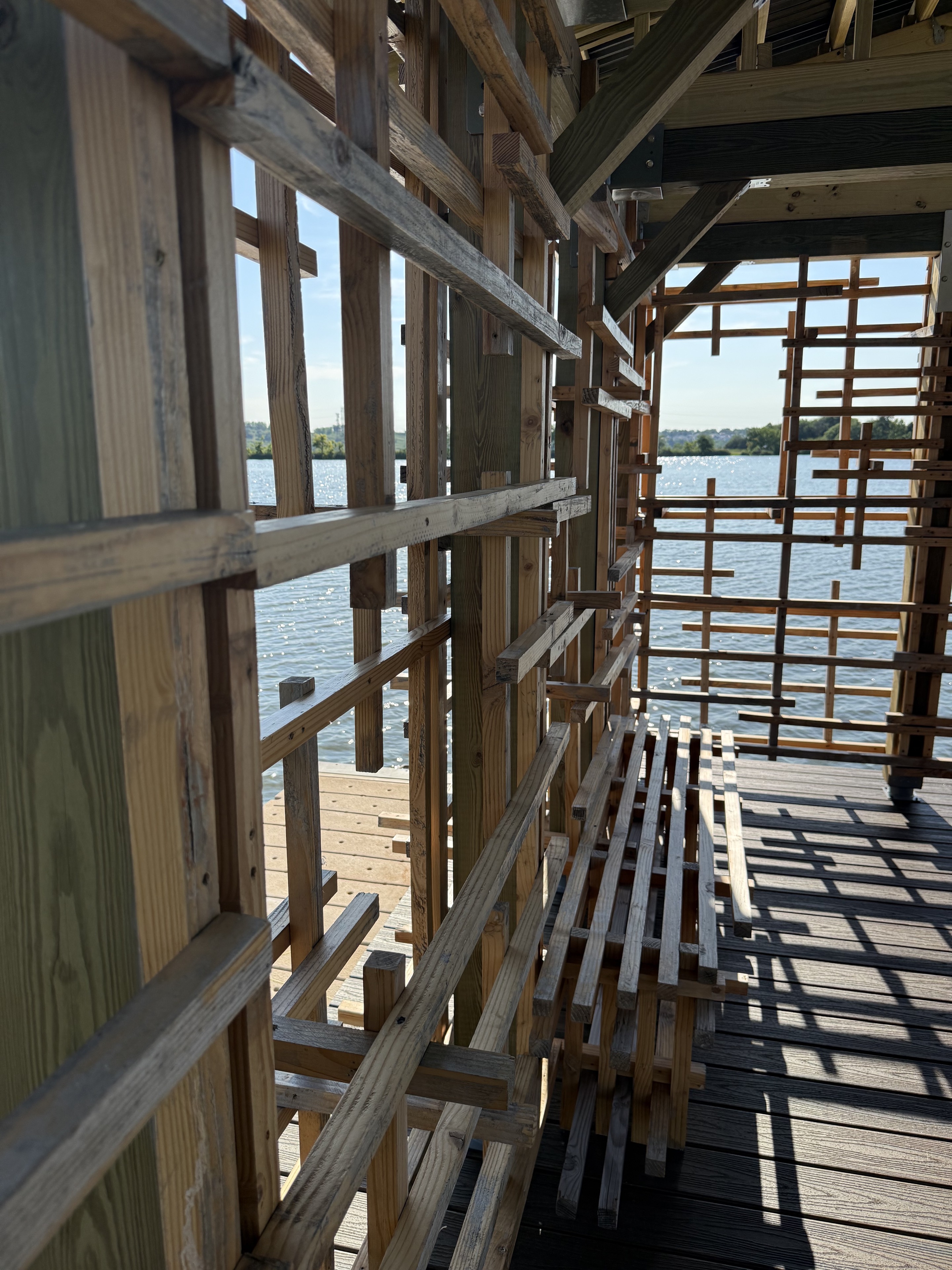
Architecture is often described at full volume: civic buildings, stadiums, high-rises, monuments seen from far away. Here it was nearly hidden. A roof. A bench. A shelf. A few openings discovered along a boardwalk.
Small enough to feel the body inside it. Open enough to borrow its scale from water, weather, reeds, and time.
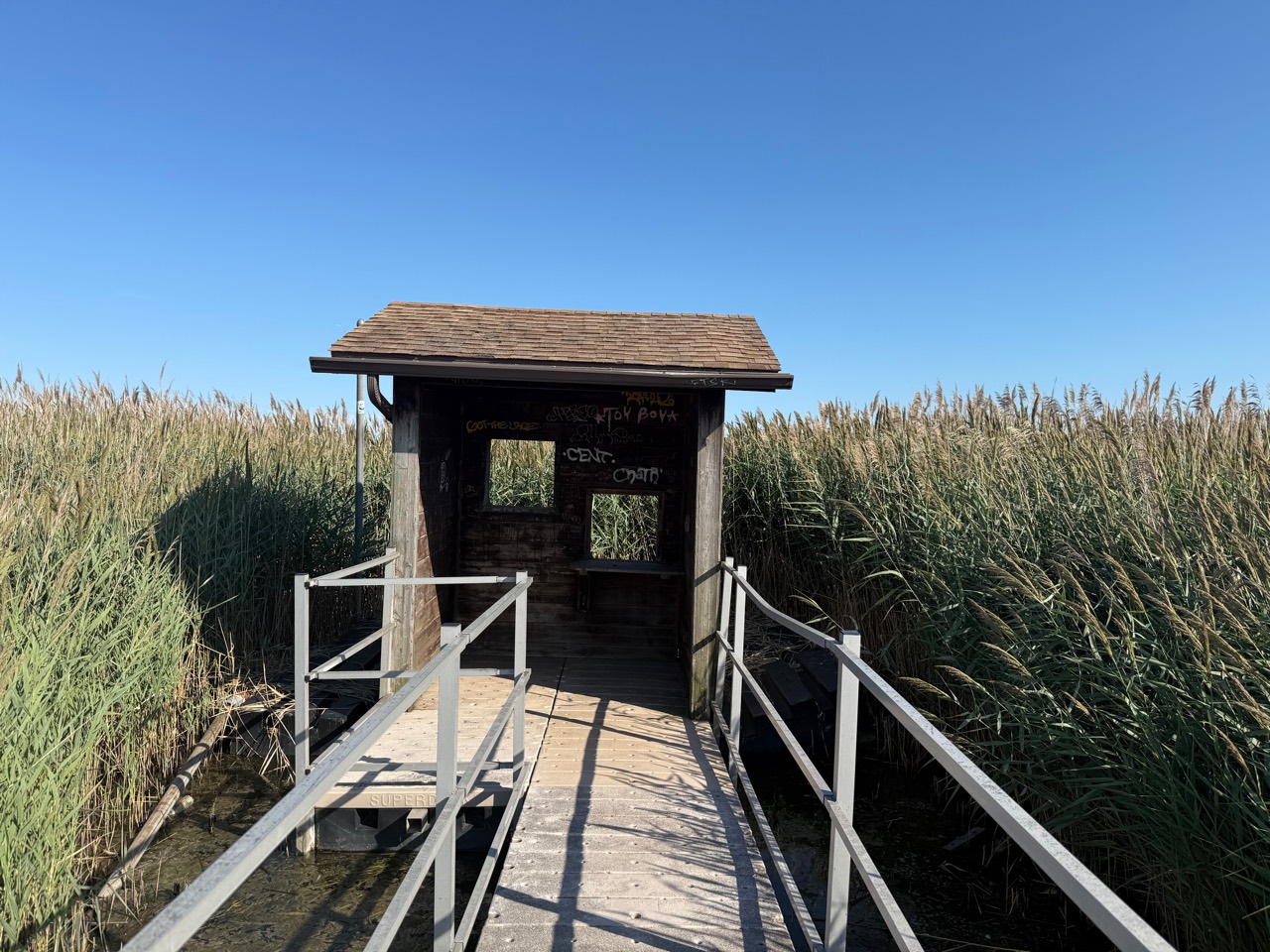
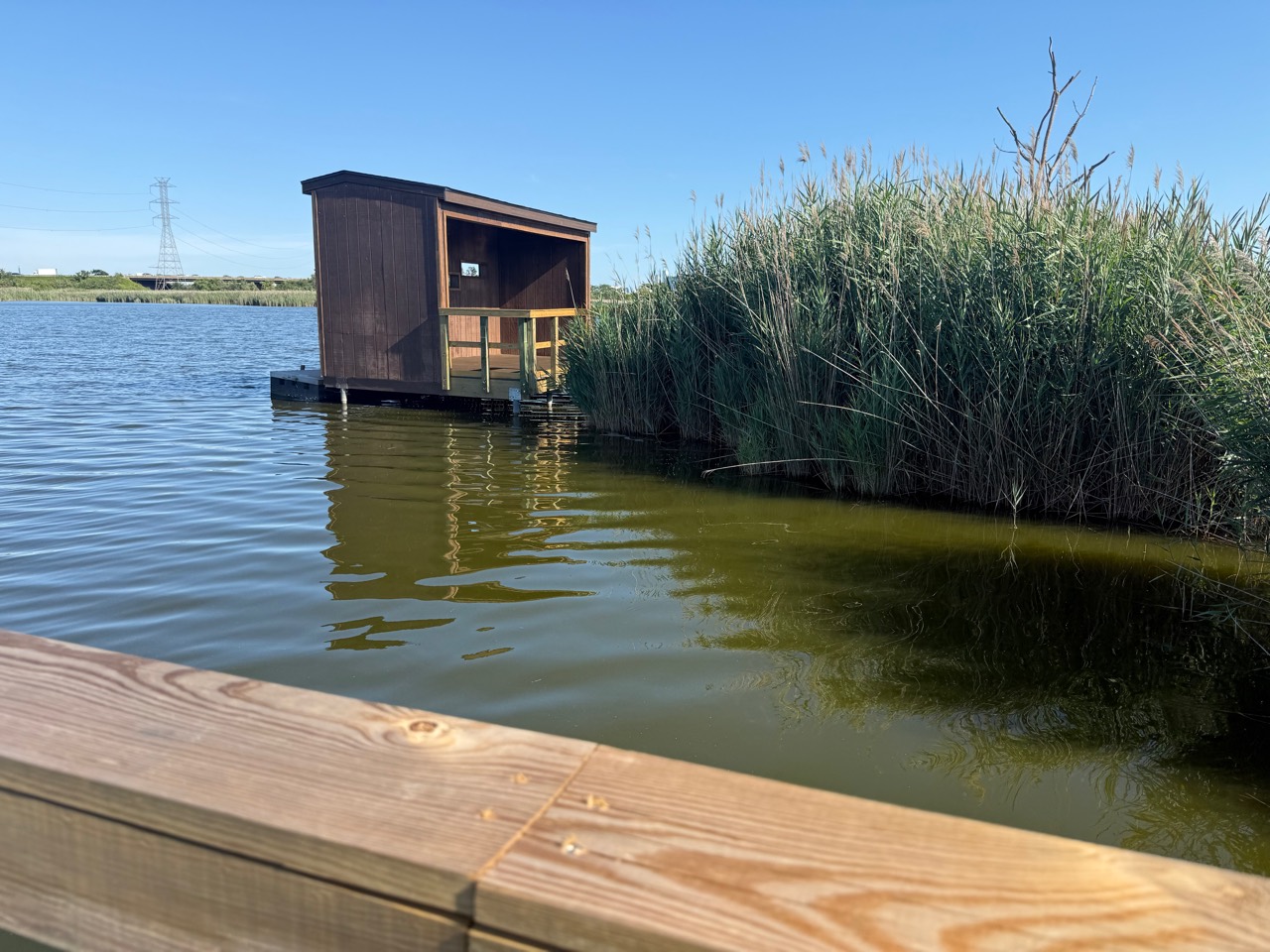
The park itself was once slated to become a landfill. Now the Environment Center studies the Meadowlands, the observatory looks beyond them, and these little rooms sit inside a preserved and restored urban landscape, asking almost nothing and changing how it is seen.
An observatory asks us to look up. A blind asks us to look through.
I went there to decide where I worked better. I came back thinking about how little architecture it takes to make a room—and how much world that little room can hold.