
Light as an Architectural Edge
At 13 Arlington, the intervention gains clarity through a deliberate contrast between existing brick, new black metal, patterned masonry, and light.
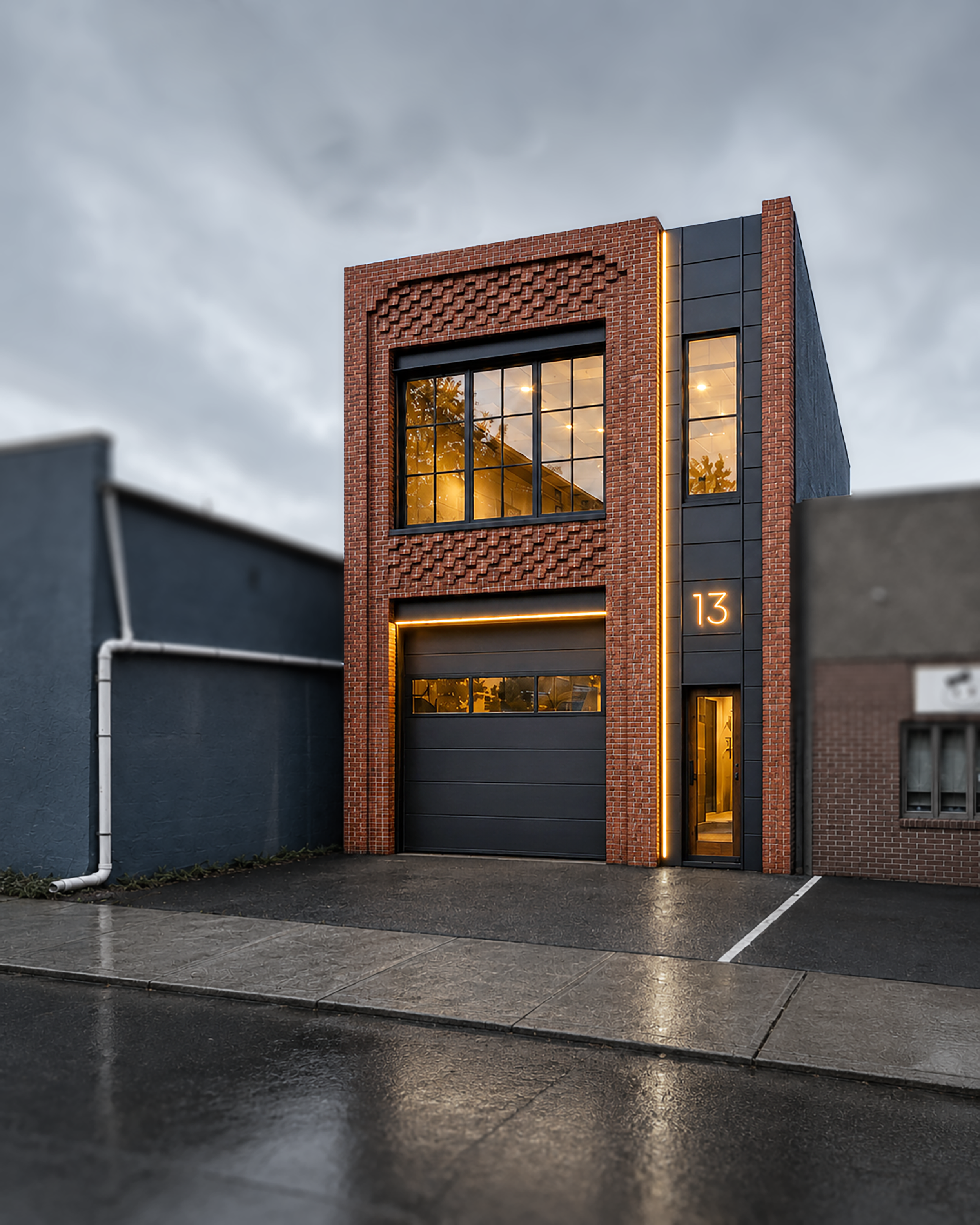
The identity of an existing building does not always need to be replaced. Often, the stronger move is to understand what is already present, decide what should remain legible, and make the new work precise enough to stand beside it.
Start with the existing fabric
Existing brick carries weight: visual, material, and historical. Treating it as a neutral background would miss the opportunity. At 13 Arlington, the brick remains an active part of the composition while the new intervention establishes a distinct identity.
That distinction matters. Adaptive work becomes clearer when the building can communicate what was inherited and what was deliberately added. The goal is not contrast for its own sake, but a readable relationship between old and new.
Use contrast to create order
Deep black metal gives the altered portions of the facade a precise edge against the texture and warmth of the masonry. Patterned brickwork adds depth without competing with the primary frame, allowing shadow to change the elevation over the course of the day.
A limited material vocabulary can still produce richness when each material has a clear job. Brick provides mass and texture. Metal provides definition. Glass exposes activity. Light connects them after dark.
Let light behave like material
Architectural lighting is most effective when it reinforces the geometry rather than decorating it. Here, light traces critical edges and reveals depth. It makes the intervention legible from a distance while preserving the weight of the original building.
The illuminated line is thin, but it changes the reading of the whole facade. That is the useful lesson: a restrained move can carry significant identity when it is placed with intention.
The larger lesson
A successful adaptive intervention does not need to erase the building it inherits. It needs to clarify the next chapter. The most durable identity often comes from a few disciplined decisions repeated consistently across material, proportion, detail, and light.